








Factur-X is a hybrid electronic invoice format: a human-readable PDF with structured data embedded for machine processing. This article explains how it works, what distinguishes it from UBL and CII, and what you can actually do with it.
What is Factur-X?
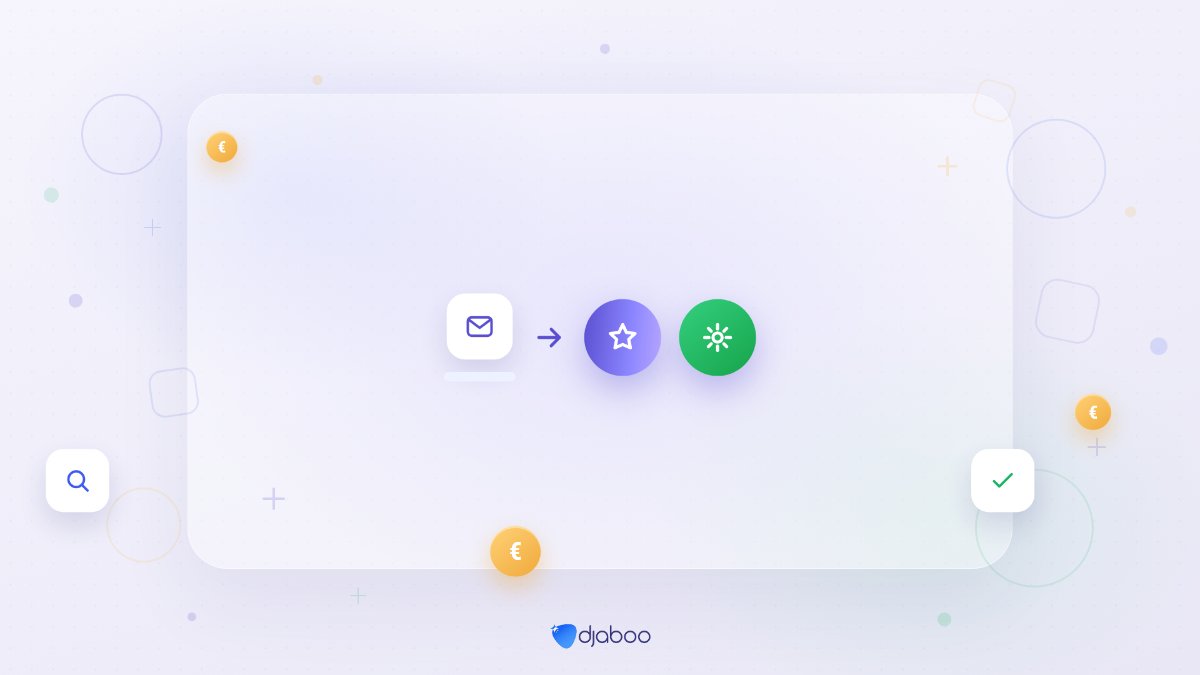
Factur-X is an electronic invoice format called mixte ou hybrid : the same file contains two layers. The first is an ordinary PDF, the one you open and read like any invoice; the second is a structured data file (XML) embedded inside the PDF, invisible to the eye, which software reads to process the invoice automatically: amounts, VAT, identifiers, due dates, lines.
This standard originated from a Franco-German initiative: it is the twin of the German ZUGFeRD format, developed jointly, and it complies with the European standard for electronic invoicing (EN 16931), which defines the data that an electronic invoice must contain. In France, Factur-X is one of the base formats of the reform of electronic invoicing, alongside UBL and CII: the three formats that all approved platforms must know how to exchange.
If you run a very small business or a small to medium-sized enterprise, here's the key takeaway: Factur-X is the format that allows you to continue to see Your invoices will remain as before, while the systems process them as data. It's very likely that your software will issue yours in this format.
The genius of the format: one invoice, two readers
To understand why Factur-X has become so popular, you have to look at the problem it solves. An invoice has always had two audiences: the human (the client who checks it, the accountant who audits it, the judge in case of a dispute) and the machine (the software that imports, reconciles, and records it). Purely structured formats like UBL or CII work perfectly for machines, but a human opening the file only sees tags. The classic PDF works perfectly for humans, but the machine has to decipher it using character recognition, with the errors that come with it.
Factur-X eliminates arbitration: the same file is at a time The document is readable and the data is accurate. A client with only a PDF reader sees a standard invoice; their platform and accounting software, however, read the XML down to the cent, without OCR or re-entry. This also ensures consistency: the data processed is exactly what the document contains, not a reconstruction.
Where does Factur-X come from: the little story that sheds light on the present
The standard is supported, on the French side, by the National Forum for Electronic Invoicing (FNFE-MPE), and on the German side by the FeRD forum: the two organizations merged their work to produce a common format, published under two names (Factur-X in France, ZUGFeRD in Germany) but identical in its recent versions. This pedigree explains two strengths of the format: it was designed by B2B invoicing practitioners, not imposed from above; and it aligns with the European standard EN 16931, the one that defines the semantic data of an electronic invoice throughout the European Union. As a result, a correctly formatted Factur-X invoice is understood in France and Germany, and readable everywhere the European standard is referenced. For an SME that does business with Germany, this is an immediate and silent advantage: the same file is used on both sides of the Rhine.
Profiles, from the smallest to the largest
| Profile | What he wears | usage type |
|---|---|---|
| MINIMUM | Essential header data (identities, totals) | Basic cases; insufficient for most treatments |
| BASIC WL | The enhanced header, without the line details | A feed where line details are not used |
| BASIC | Data with lines, for simple invoices | Current billing of goods and services |
| EN 16931 | The complete set of European standards | The reference profile for compliant exchanges |
| EXTENDED | Additional data beyond the standard | Sectors and flows with advanced needs |
The key takeaway is this: the profile is a software publisher setting, not a user choice. Your tool sends data in a profile that conforms to the requirements of the workflow, and the recipient receives what they need to process it. If a client asks you for "Factur-X profile EN 16931," the correct response is to ask your software publisher or platform provider, not to consult the technical documentation.
Factur-X, UBL, CII: the three formats of the base
| Factur-X | UBL | IIC | |
|---|---|---|---|
| Nature | Hybrid: Readable PDF + Embedded XML | pure structured XML | pure structured XML |
| Readable by a human without dedicated software | Yes: it's a PDF | No (tags) | No (tags) |
| Origin | Franco-German standard (similar to ZUGFeRD), conforming to EN 16931 | OASIS international standard, widely used (particularly in Peppol) | UN/CEFACT standard (this is also the syntax for embedded data in Factur-X) |
| Preferred terrain | Very small businesses/small and medium-sized enterprises, circuits where the human element is reinterpreted | Automated high-volume, international exchanges | Structured inter-company exchanges |
The important point: these three formats are legal equivalents In the French reform, approved platforms accept and convert them. Therefore, you don't have to choose one "right" format over another: your system issues one, your client's accepts another, and the process handles the translation. Factur-X simply dominates the usage of small businesses because it doesn't change the human experience of invoicing.
Under the hood: how a Factur-X is made
Without unnecessary jargon, three things to know about mechanics:
- The container is a PDF/A-3. It's a PDF archiving variant, designed to remain readable over time and capable of embedding attachments. This ability to embed files allows data to be dragged and dropped into the document.
- The embedded data is in standardized XML. The attached file follows CII syntax and contains invoice information according to the European standard: identification of parties, lines, totals, VAT, due dates, order references.
- Profiles define the richness of the data. The standard provides several levels, from a minimal profile (a few header data points) to complete profiles compliant with EN 16931, up to an extended profile for advanced needs. The more comprehensive the profile, the more automation the recipient can perform. As part of the reform, invoices must include the data required by regulations: your software handles this automatically; the profile is not something you select manually.
The practical consequence of this mechanism: A Factur-X cannot be made by hand.Exporting a PDF from a word processor does not create the data layer; neither does scanning a paper invoice; and "save as PDF/A" is insufficient. Only a tool that generates the XML and embeds it correctly produces a valid Invoice-X, which explains the central role of invoicing software in the reform.
Factur-X in the French reform: what concerns you
Since September 2026, all companies subject to VAT have received their B2B invoices through approved platforms; this service will be extended to SMEs and micro-enterprises in September 2027. Within this system, Factur-X plays three specific roles for a small business:
- Upon reception Your suppliers' invoices often arrive in this format. Good news: you open them like any PDF, and your tool or platform uses the data without re-entry: reconciliation, accounting, payment schedule.
- On air At your due date, your B2B invoices will be sent in a standard format. If your system issues invoices in Factur-X, your clients will receive a document they can review manually, which streamlines acceptance, especially for smaller, less automated clients.
- In control The platforms check the file's conformity (structure, information, consistency) before transmitting it. A malformed file is rejected with its pattern: hence the importance of transmitting from an up-to-date tool rather than tinkering.
A quick reminder of the scope: this channel concerns domestic B2B. Your sales to individuals and abroad follow the e-reportingand your invoices will remain in their usual formats. comprehensive guide to the reform puts everything into perspective.
Receiving an Invoice-X: how to read and verify it
In everyday use, nothing changes for your eyes: double-click, the PDF opens, the invoice is readable. Three useful reflexes are added:
- Let the machine read the machine. If your management tool imports the invoice, it reads the XML file: the amounts it displays are accurate to the cent. Visually correcting imported data simply because the PDF "looks" different should raise a red flag: the two layers are supposed to be identical; any discrepancy indicates a file defect and should be reported to the sender.
- Archive the original file. The invoice is constituted by the complete file (PDF + data); printing or saving it again may destroy the data layer. Archiving is done on the original, for the legally required periods, using your tool or platform.
- If you have any doubts about a supplierThe standard validators make it possible to verify the conformity of a file; in practice, your approved platform does this check for you at the entry point of the circuit.
Issuing in Factur-X: the actual procedure
The procedure boils down to one decision: invoice from a compliant tool connected to the system. Everything else (the PDF/A-3, the XML, the data profile, the annotations) is generated by the tool from what you already enter: the client, the lines, the conditions. This is the case with Djaboo Invoices originate from quotes and catalogs, include their information and structured data, and enter the workflow via an approved partner platform; the user, however, continues to create invoices, not files. The key point of focus is therefore not technical but organizational: own basic data (Customer SIREN numbers, addresses, correct VAT rates), because the format faithfully transmits what is given to it, errors included. And if you're wondering where you stand with your obligations, the reform simulator and the verification of your registration on an approved platform are the first two stops.
The Factur-X checklist for a very small business, in five points
- Does my invoicing software output in a standard format? The question is posed to your publisher via email. If they reply Factur-X, UBL, or CII with connection to an approved platform, the format issue is closed for you.
- Is my master data clean? Business customer registration numbers (SIREN) and addresses, VAT rates for the catalog, payment terms: this is what will populate the XML file. An hour spent reviewing the records is better than a series of rejections.
- Does my archive retain the original files? The invoice is the complete file. Check that your tool or platform archives the original, not a printout.
- Does my reception know how to handle hybrid and old world styles? During the transition, you'll receive invoices in various formats, including Factur-X, UBL, simple PDFs, and paper. Your accounts payable workflow must accommodate both formats without creating two separate filing systems.
- Who looks at the statutes? The perfect format does not prevent rejection for inconsistent data: someone must see the statuses and correct them quickly, as with the entire circuit.
If all five answers are correct, Factur-X is a non-event for you: the highest compliment one can pay to a format.
Misconceptions about Factur-X
- "My PDF is already an electronic invoice." No: a simple PDF, even a clean one, has no data layer. Within the reform process, it is not a core format and will be rejected.
- "I'm going to scan my paper invoices using Factur-X." A scan is an image: there is no structured data to embed. The Factur-X is generated when the invoice is created, not afterwards.
- "I have to choose between Factur-X, UBL and CII." No: all three are accepted and the platforms convert. The choice belongs to your tool; your only concern is that it complies.
- "Factur-X is for France only." The standard is Franco-German (ZUGFeRD across the Rhine) and is based on the European standard: your exchanges with Germany benefit directly from this, and the logic of the EN 16931 standard is that of all of Europe.
- "It's a technical issue; my developer will look into it." For the vast majority of very small and small businesses, there's nothing to develop: the invoicing tool does everything. Custom development (via Electronic invoicing API) only concerns companies that have their own systems to connect.
Frequently Asked Questions about Factur-X
Is Factur-X mandatory?
What is mandatory is that your domestic B2B invoices go through the system in one of the standard formats: Factur-X, UBL, or CII. Factur-X isn't required per se, but it's the most common format for small businesses because it remains human-readable. In practice, your software decides, and you don't have to make the final decision.
What is the difference between Factur-X and ZUGFeRD?
These are two names for the same standard, developed jointly by the French and German organizations: Factur-X in France, ZUGFeRD in Germany. Recent versions of both are technically identical, making Franco-German exchanges seamless.
How can I tell if a received invoice is indeed an Factur-X?
To the naked eye, it looks like a regular PDF; the difference is inside. Your approved platform and tool recognize it and use its data; some PDF readers display the embedded XML attachment. If your tool imports the invoice with its amounts without OCR or re-entry, it's a sign that the data layer is present and working.
Can I create a Factur-X for free?
Tools and libraries for the standard exist, but the real issue isn't producing a standalone file: it's issuing compliant, numbered invoices that are properly transmitted and archived. This is the role of invoicing software connected to an approved platform; for a company, even a very small one, a "free" file created manually is more expensive in terms of risk than using a suitable tool.
What happens to my old PDFs and paper invoices?
They remain valid for what they are: invoices issued under the old system, to be kept for the usual retention periods. The switchover does not rewrite the past; it applies to invoices issued from your due dates onward, and during the transition, your suppliers will switch over in a staggered fashion: your receiving process must be able to manage both systems.
Does Factur-X work with Chorus Pro for the public sector?
Yes: Chorus Pro, the public sector invoicing portal, accepts invoices in Factur-X format. A company that issues invoices in Factur-X therefore serves its private clients through approved platforms and its public clients via Chorus Prowith the same file format: one more reason for its popularity in SMEs.
Are there multiple versions of Factur-X? Which one should I use?
The standard evolves through versions published by the forums that support it, like any living standard. Your software vendor keeps track of these developments and releases a version accepted by the system; the user doesn't need to choose a version or migrate. The only useful precaution is to keep your software up to date, which applies to the entire reform.
Does the format guarantee that the invoice is correct?
No: it guarantees that the data is structured and transmitted accurately, and the platforms control the form (text, internal consistency). The content (the correct customer, the correct price, the correct VAT) remains your responsibility: a perfect format can also transmit a rate error very well. The quality of the master data remains the primary focus, regardless of the format.
The main thing to remember
Factur-X in 2026 will be the invoice with two readable formats: a PDF for humans, standardized data for systems, all in a single file compliant with the core of the French reform and the Franco-German standard. You don't have to create or choose it: compliant invoicing software, connected to an approved platform, generates and reads it for you. Your two real challenges lie elsewhere: ensuring impeccable master data and archiving the original files. The format itself is probably the part of the reform that will require the least effort from you: it was specifically designed so that small businesses wouldn't have to put in any effort.